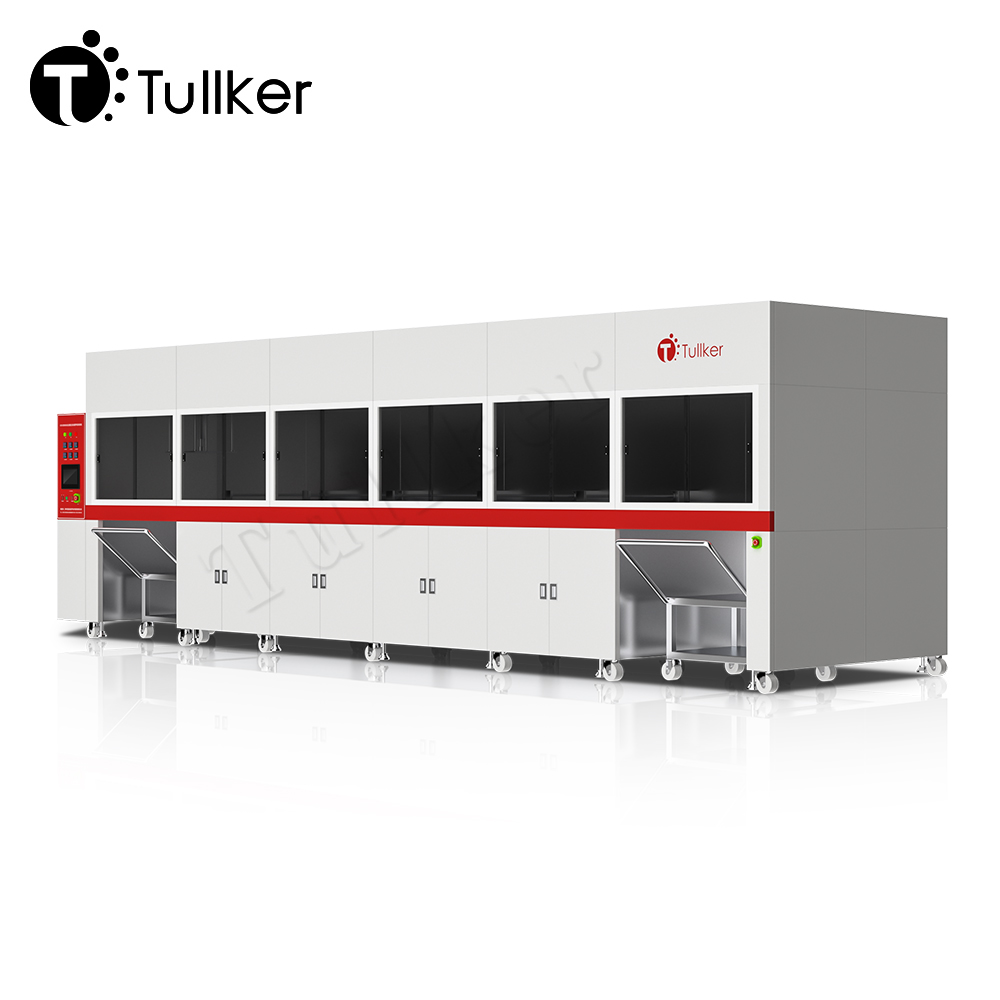



With the development of technology, ultrasonic technology has penetrated into various industries, including aviation maintenance. Aircraft engines are crucial equipment in aviation operations, and regular cleaning and maintenance are essential for their proper functioning. However, traditional cleaning methods often struggle to remove stubborn dirt from inside the engine, causing significant problems for aircraft maintenance. Fortunately, the advent of ultrasonic cleaners offers an excellent solution to this challenge.
First, understanding the basic principles of ultrasound is necessary.
Ultrasound is a sound wave with a frequency higher than 20,000 Hz, imperceptible to human hearing. This high-frequency sound wave, during propagation, generates mechanical vibrations in its path, producing a powerful cleaning effect. Ultrasonic cleaners utilize this principle, converting ultrasonic waves into microscopic mechanical vibrations to powerfully clean dirt from both the surface and interior of objects. For aircraft engine cleaning, traditional methods primarily use chemical cleaning agents and high-pressure water guns. However, these methods are often ineffective against stubborn dirt and may damage certain engine components. In contrast, ultrasonic cleaners offer significant advantages.
First, ultrasonic cleaners are harmless to aircraft engine components of any material. Due to the mechanical vibration of ultrasound, it can effectively remove dirt without damaging engine components. This is a significant advantage, as aircraft engine components are typically made of expensive and complex metal alloys.
Secondly, ultrasonic cleaners are extremely efficient. Because ultrasound can penetrate deep into the interior of objects, peeling dirt from the surface of components, cleaning time is greatly reduced. This is undoubtedly a very attractive advantage for the aerospace industry, which requires high-efficiency maintenance.
Furthermore, ultrasonic cleaners are easy to operate and energy-efficient. Compared to traditional cleaning methods that consume large amounts of chemicals and water, ultrasonic cleaners consume very few resources and produce no chemical waste, making them environmentally friendly.
However, despite these advantages, some issues still need to be considered when using ultrasonic cleaners. For example, because the vibration of ultrasound can affect delicate components, special attention must be paid to selecting the appropriate cleaning frequency and time. Additionally, for some particularly complex engine components, it may be necessary to use them in conjunction with other cleaning methods.
Ultrasonic cleaners are undoubtedly an excellent solution to the problem of cleaning dirt from aircraft engines. With the further development of ultrasonic technology, we expect this highly efficient cleaning method to be applied in more fields, bringing more convenience and safety to our lives.