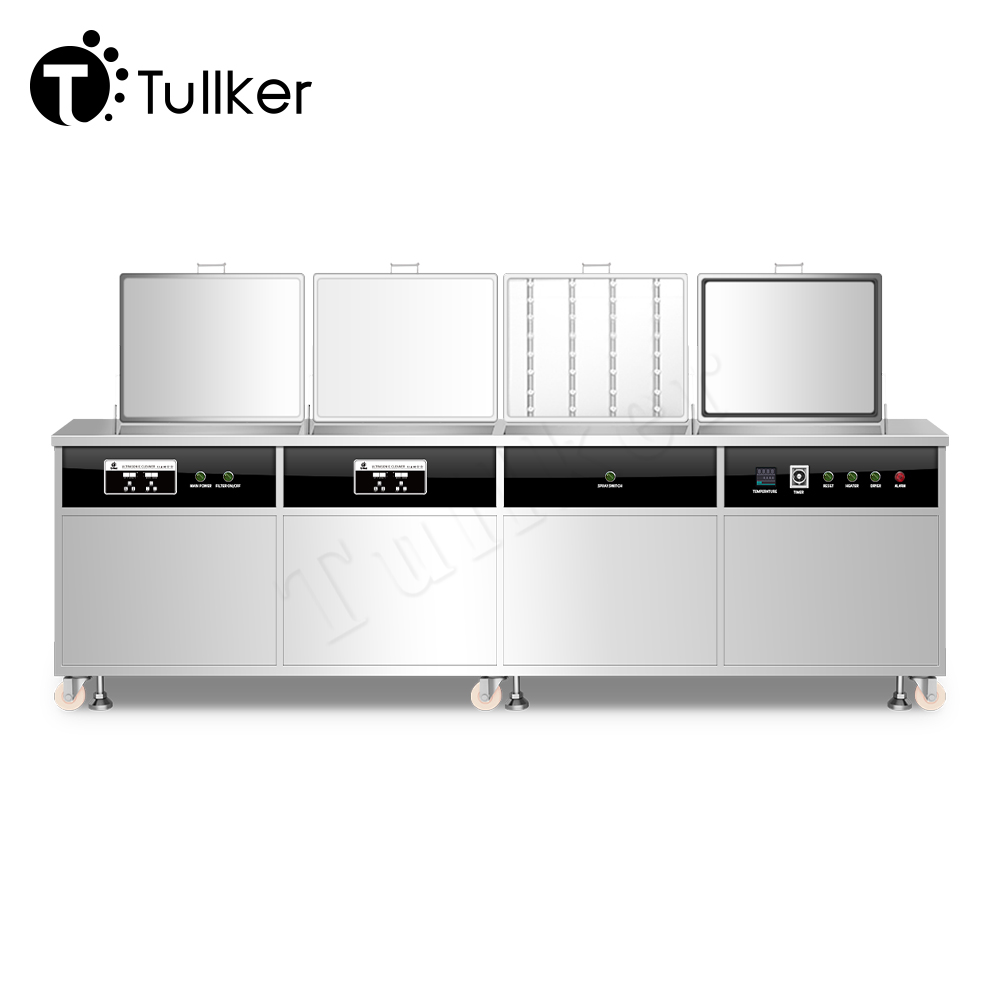



An ultrasonic cleaner is a device that utilizes the physical properties of ultrasound to clean items efficiently, quickly, and with high quality. Ultrasonic cleaners offer significant advantages and effectiveness in cleaning residues inside glassware.
I. The Principle of Ultrasonic Cleaners
Ultrasonic cleaners generate microbubbles through high-frequency vibrations. When these bubbles burst instantaneously under the influence of ultrasound, they produce an impact force of up to tens of atmospheres. This impact force can peel away dirt from the surface of items, achieving a cleaning effect. Simultaneously, the cavitation effect of ultrasound causes microbubbles in liquids to vibrate under the influence of sound waves. When these bubbles expand and compress during vibration, they also generate powerful shock waves, further cleaning the surface of items.
II. Application of Ultrasonic Cleaners in Glassware Cleaning
Glassware is commonly used in laboratories, medical settings, and pharmaceutical fields. Because residues inside may affect experimental results or pose a health hazard, thorough cleaning is essential. Traditional cleaning methods include hand washing, soaking, and rinsing, but these methods are inefficient and struggle to reach every corner of the glassware. In contrast, ultrasonic cleaners are highly efficient at removing residues from the inside of glassware.
III. Advantages of Ultrasonic Cleaners
1. High-efficiency cleaning: Ultrasonic cleaners can quickly remove residues from the inside of glassware in a short time, greatly improving cleaning efficiency.
2. No damage to the glassware: The impact force of ultrasonic cleaners cleans the surface of the glassware without damaging the glassware itself, effectively protecting the laboratory equipment.
3. Thorough cleaning: Ultrasonic cleaners can thoroughly clean every corner of the glassware, including hard-to-reach areas, ensuring comprehensive cleaning.
4. Resource conservation: Ultrasonic cleaners can operate at room temperature and pressure, eliminating the need for large amounts of water and chemical cleaning agents, effectively conserving resources.
5. Simple operation: Ultrasonic cleaners are simple and convenient to operate, requiring minimal professional skills and manpower.
IV. How to use an ultrasonic cleaner
1. Place the glassware to be cleaned into the dedicated container of the ultrasonic cleaner and add an appropriate amount of water or cleaning agent.
2. Turn on the ultrasonic cleaner and set the appropriate cleaning time and temperature.
3. After cleaning is complete, remove the glassware, rinse it thoroughly with clean water, and let it air dry. It's important to note that different glassware materials have varying degrees of adaptability to ultrasonic cleaning; therefore, the appropriate cleaning time and power must be selected based on the specific situation. Additionally, for some special residues, such as proteins and greases, specific cleaning agents are required.
V. Application Scope of Ultrasonic Cleaners
Ultrasonic cleaners are widely used in laboratories, medical, pharmaceutical, optical, and electronic fields. They can clean various glassware, test tubes, beakers, optical lenses, electronic components, and other items. Ultrasonic cleaners can also be used to clean valuable items such as jewelry and watches.
VI. Conclusion
Ultrasonic cleaners are highly efficient and high-quality cleaning equipment, offering significant advantages and effectiveness for cleaning difficult-to-clean items such as glassware. Using ultrasonic cleaners can greatly improve cleaning efficiency, save resources, and reduce manpower. With continuous technological advancements and the expansion of application areas, ultrasonic cleaners will be applied and developed in even more fields.