


Optical mirrors are a critical component in various optical instruments and precision equipment, and their surface accuracy and cleanliness have a significant impact on the performance and stability of these devices.
However, in practical use, optical mirrors are easily contaminated by dust, fingerprints, oil stains, chemical residues, and other pollutants. These contaminants affect light reflection and refraction, leading to a decrease in instrument performance.
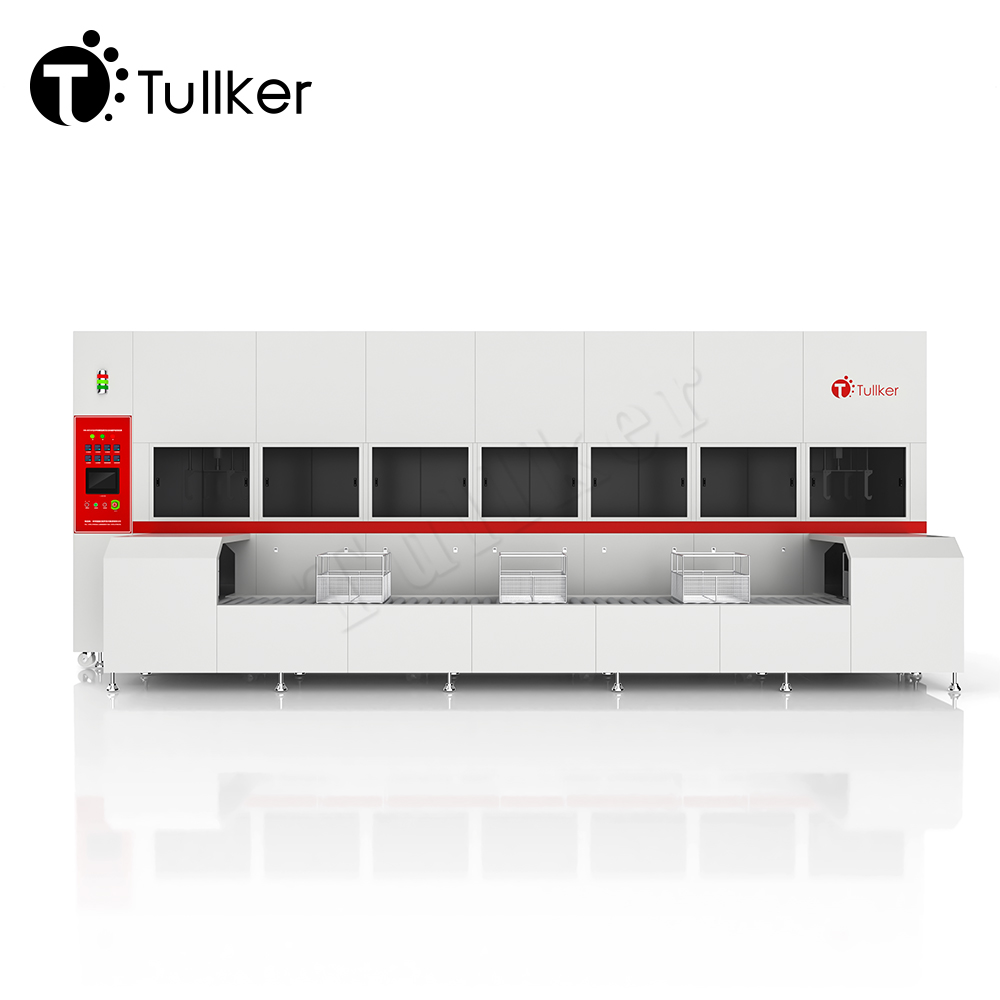
To address this problem, ultrasonic cleaning machines are widely used for cleaning optical mirrors. Below, we will provide a detailed explanation of the efficient solutions offered by ultrasonic cleaning machines in addressing the problem of optical mirror contamination.
I. Working Principle of Ultrasonic Cleaning Machines
Ultrasonic cleaning machines work by generating tiny bubbles through high-frequency vibrations. These bubbles rapidly collapse in the liquid, producing powerful shock waves that detach contaminants from the optical mirror surface, thus achieving the cleaning purpose. This cleaning method offers advantages such as high efficiency, speed, uniformity, and no damage to the mirror surface.
II. Advantages of Ultrasonic Cleaning Machines
1. Excellent cleaning effect: Ultrasonic cleaning can thoroughly remove dust, fingerprints, oil stains, and other contaminants from optical mirror surfaces, resulting in a significant cleaning effect.
2. Uniform cleaning: Ultrasonic cleaning ensures uniform cleaning across the entire optical mirror surface, preventing instrument performance degradation due to localized contamination.
3. No damage to the mirror surface: The cleaning process of ultrasonic cleaning machines does not involve friction or violent vibrations, therefore it will not cause damage to the optical mirror surface.
4. High efficiency and energy saving: Ultrasonic cleaning machines have short cleaning times and high efficiency, effectively reducing cleaning costs.
5. Environmentally friendly: The cleaning agents used in ultrasonic cleaning machines are mostly environmentally friendly solvents, posing no harm to the environment.
III. Applications of Ultrasonic Cleaning Machines
1. Cleaning in the mass production of optical lenses: In the production process of optical lenses, cleaning is required multiple times to ensure the cleanliness of the lens surface. Using an ultrasonic cleaning machine can efficiently and quickly complete this task.
2. Maintenance and upkeep of laboratory instruments: Various optical instruments in laboratories require regular maintenance and upkeep to maintain their performance and stability. Using an ultrasonic cleaning machine can conveniently and quickly clean optical mirror surfaces, extending the service life of the instruments.
3. Cleaning on industrial production lines: On the production lines of various optical instruments and equipment, using ultrasonic cleaning machines to clean optical mirror surfaces can greatly improve production efficiency and product quality.
IV. How to Use Ultrasonic Cleaning Machines
1. Select the appropriate cleaning agent: Choose the appropriate cleaning agent based on the type of contaminant. For example, for oily contaminants, a solvent-based cleaning agent can be used; for water-soluble dirt, an alcohol-based cleaning agent can be used.
2. Set a reasonable cleaning time: Set a reasonable cleaning time based on the degree of contamination and the properties of the cleaning agent. Too short a time will not achieve the cleaning effect, while too long a time may cause damage to the mirror surface. 3. Adjusting the appropriate cleaning temperature: Increasing the cleaning temperature can improve the cleaning effect, but excessively high temperatures may cause changes in the mirror surface properties. Therefore, the appropriate cleaning temperature needs to be adjusted according to the actual situation.
4. Proper placement of optical lenses: Before placing the optical lenses into the ultrasonic cleaning machine, they need to be properly arranged to avoid stacking and collision, which could damage the lenses.
5. Regular maintenance and upkeep: To ensure the normal operation of the ultrasonic cleaning machine, regular maintenance and upkeep are necessary, including cleaning the inside and outside of the cleaner and replacing worn parts.
Ultrasonic cleaning machines are an efficient solution for addressing the problem of optical mirror contamination. In practical use, it is necessary to select the appropriate cleaning agent, set reasonable cleaning time and temperature, properly arrange the optical lenses, and perform regular maintenance and upkeep, all based on the specific circumstances. Only in this way can the full potential of the ultrasonic cleaning machine be realized, improving the performance and stability of optical instruments and equipment.