


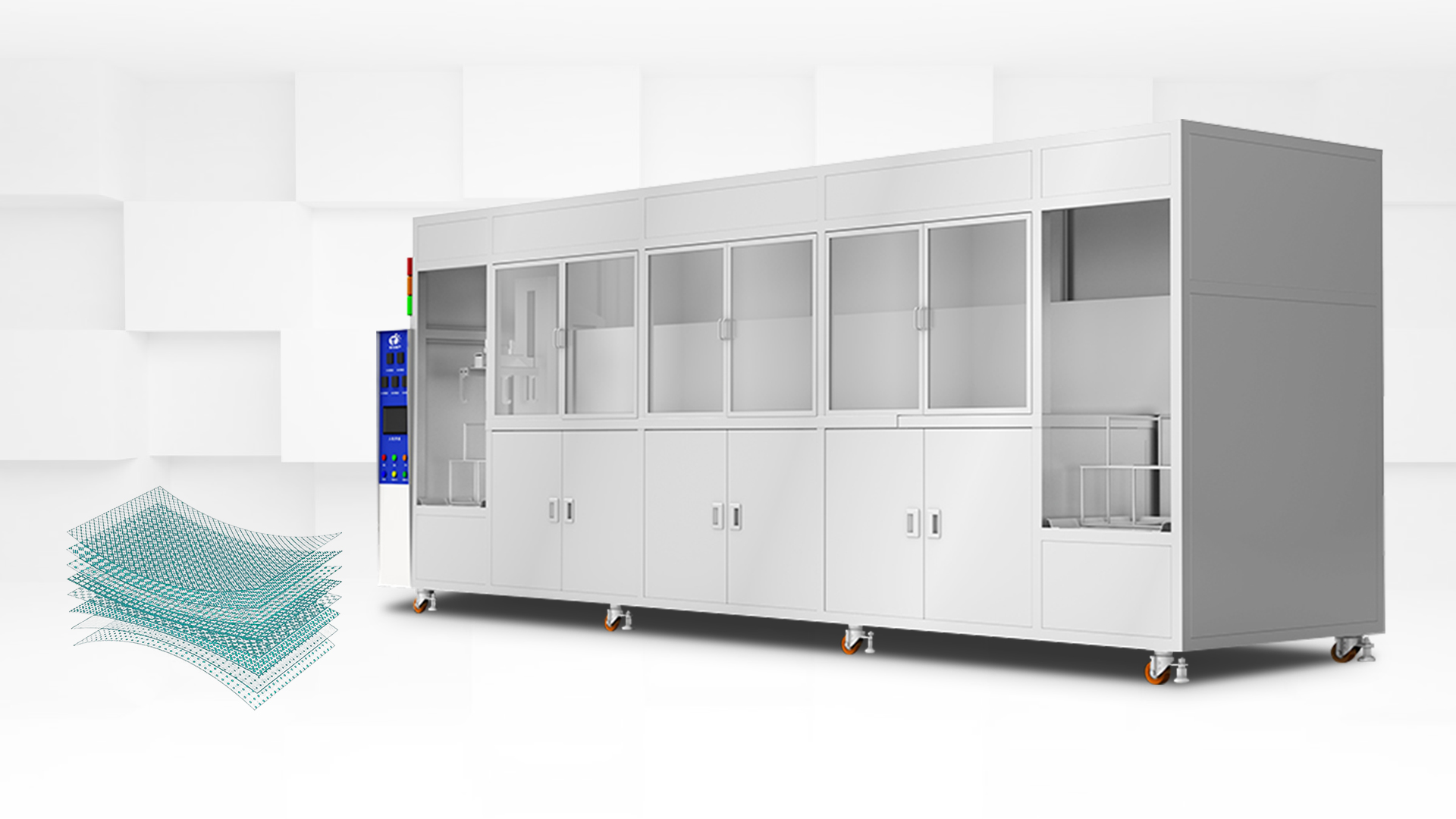
Nanomaterial research is an interdisciplinary field involving multiple disciplines such as physics, chemistry, and biology. Nanomaterials possess many unique physical and chemical properties, such as small size effects and surface effects. These properties give nanomaterials broad application prospects in many fields, such as energy, medicine, and environmental protection. Cleaning is a very important step in nanomaterial research. Due to the very small size and special structure of nanomaterials, traditional cleaning methods may not meet the requirements. Therefore, ultrasonic cleaning machines have been widely used in nanomaterial research.
An ultrasonic cleaning machine is a device that uses ultrasonic vibrations to accelerate the collapse of tiny bubbles in the cleaning liquid, thereby generating high-speed microjets to clean objects. This cleaning method has advantages such as high efficiency, speed, and deep penetration, and can effectively remove impurities and contaminants from the surface of nanomaterials, ensuring the quality and performance of the nanomaterials. Below, we will detail the cleaning and applications of ultrasonic cleaning machines in nanomaterial research.
1. Cleaning Nanomaterials: Nanomaterials usually have very small sizes and special structures, and adsorbed impurities and contaminants on the surface can affect their performance and stability. Ultrasonic cleaning machines can utilize the tiny bubbles generated by ultrasound to collapse in the cleaning liquid, producing high-speed microjets, thereby effectively cleaning impurities and contaminants adsorbed on the surface of nanomaterials. Compared with traditional cleaning methods, ultrasonic cleaning machines have better cleaning effects and higher cleaning efficiency.
2. Nanomaterial Dispersion: Nanomaterials usually have a very large specific surface area and activity, and are prone to agglomeration and aggregation, which affects their performance and applications. Ultrasonic cleaning machines can utilize the cavitation effect generated by ultrasound to disperse nanomaterials in the cleaning liquid, effectively preventing the agglomeration and aggregation of nanomaterials. Compared with traditional dispersion methods, ultrasonic cleaning machines have better dispersion effects and higher dispersion efficiency.
3. Nanomaterial Synthesis: Ultrasonic cleaning machines can not only be used for cleaning nanomaterials but also for synthesizing nanomaterials. In the synthesis of nanomaterials, ultrasound can accelerate the chemical reaction rate and promote the growth and formation of nanomaterials. For example, in the process of synthesizing nanoparticles, ultrasound can accelerate the chemical reaction rate in the solution, thereby effectively controlling the size and shape of the nanoparticles.
4. Nanomaterial Surface Modification: Ultrasonic cleaning machines can also be used for surface modification of nanomaterials. By adjusting the power and duration of the ultrasound, the surface properties of nanomaterials can be altered, thereby changing their performance and applications. For example, ultrasonic cleaning can convert hydroxyl groups on the surface of nanomaterials into carboxyl groups, thus improving their hydrophilicity and biocompatibility.
In summary, ultrasonic cleaning machines have broad application prospects in the research of nanomaterials. They can effectively clean impurities and contaminants adsorbed on the surface of nanomaterials, disperse nanomaterials, synthesize nanomaterials, and modify the surface of nanomaterials. With the continuous development of nanomaterial research, the applications of ultrasonic cleaning machines will become increasingly widespread.
Tullker - Makes Cleaning Easier
Tullker Co., Ltd.—an environmentally friendly industrial cleaning solution provider that focuses on ultrasonic industrial cleaning and integrates R&D, production, marketing, and after-sales. In ultrasonic cleaning, vacuum hydrocarbon cleaning, two-fluid cleaning, spray cleaning, A large number of successful cases have been accumulated in the fields of DPF regeneration and cleaning, and are sold in 96 countries around the world.