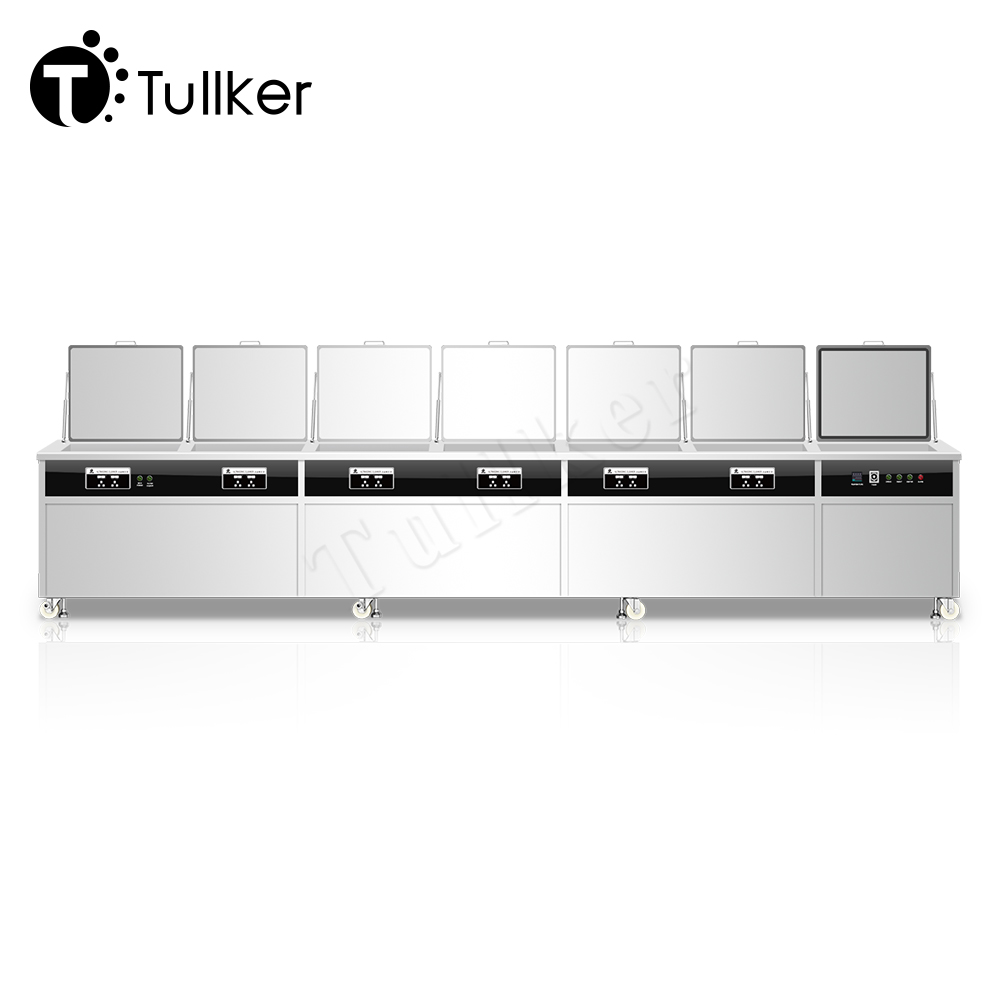



An ultrasonic cleaning machine is a device that utilizes high-frequency vibration energy transmitted into a liquid to generate cavitation, thereby cleaning dirt from the liquid. Compared to traditional cleaning methods, ultrasonic cleaning machines offer higher cleaning efficiency, lower cleaning costs, and better environmental performance, and are therefore widely used in various fields. In the field of ship coating cleaning, ultrasonic cleaning machines also have great potential and can solve problems that are difficult to address with traditional cleaning methods.
I. Current Status and Challenges of Ship Coating Cleaning: Ship coating cleaning is an important part of ship maintenance and upkeep. Its main purpose is to maintain the aesthetic appearance of the ship, prevent corrosion, and extend the ship's service life. Traditional cleaning methods mainly include manual cleaning, mechanical cleaning, and chemical cleaning. However, these cleaning methods all have some problems, such as low cleaning efficiency, unstable cleaning quality, and significant environmental pollution. The biggest problem is the difficulty in removing stubborn dirt and oxide layers, which leads to incomplete cleaning of the ship's coating and accelerates corrosion and aging of the ship.
II. Principles and Advantages of Ultrasonic Cleaning Machines: The principle of an ultrasonic cleaning machine is to utilize high-frequency vibration energy transmitted into a liquid to generate cavitation, thereby cleaning dirt from the liquid. Specifically, the ultrasonic cleaning machine generates high-frequency vibrations through a high-frequency vibrating plate, causing tiny bubbles to form in the liquid. These bubbles rapidly expand and contract under the action of ultrasound, generating powerful shock waves that detach dirt from the coating surface.
Compared with traditional cleaning methods, ultrasonic cleaning machines have the following advantages:
1. Higher cleaning efficiency: Ultrasonic cleaning machines can quickly remove dirt from the coating surface in a short time, greatly improving cleaning efficiency.
2. Lower cleaning costs: Ultrasonic cleaning machines use high-frequency vibration energy and do not require the use of large amounts of chemicals and water resources, reducing cleaning costs.
3. Better environmental performance: Ultrasonic cleaning machines do not produce harmful exhaust gases, wastewater, or waste residue, and do not pollute the environment.
III. Application of Ultrasonic Cleaning Machines in Ship Coating Cleaning: Ultrasonic cleaning machines have great potential in ship coating cleaning. Firstly, ultrasonic cleaning machines can effectively remove stubborn dirt and oxide layers that are difficult to clean with traditional methods, ensuring thorough cleaning of ship coatings.
Secondly, ultrasonic cleaning machines have high cleaning efficiency, significantly reducing the time required for ship coating cleaning.
Finally, ultrasonic cleaning machines use high-frequency vibration energy, which does not damage the ship's coating and can extend the lifespan of the vessel.
IV. Conclusion
Ultrasonic cleaning machines are a promising technology for ship coating cleaning. Compared with traditional cleaning methods, ultrasonic cleaning machines offer higher cleaning efficiency, lower cleaning costs, and better environmental performance. In the future, ultrasonic cleaning machines will play an increasingly important role in ship coating cleaning.