


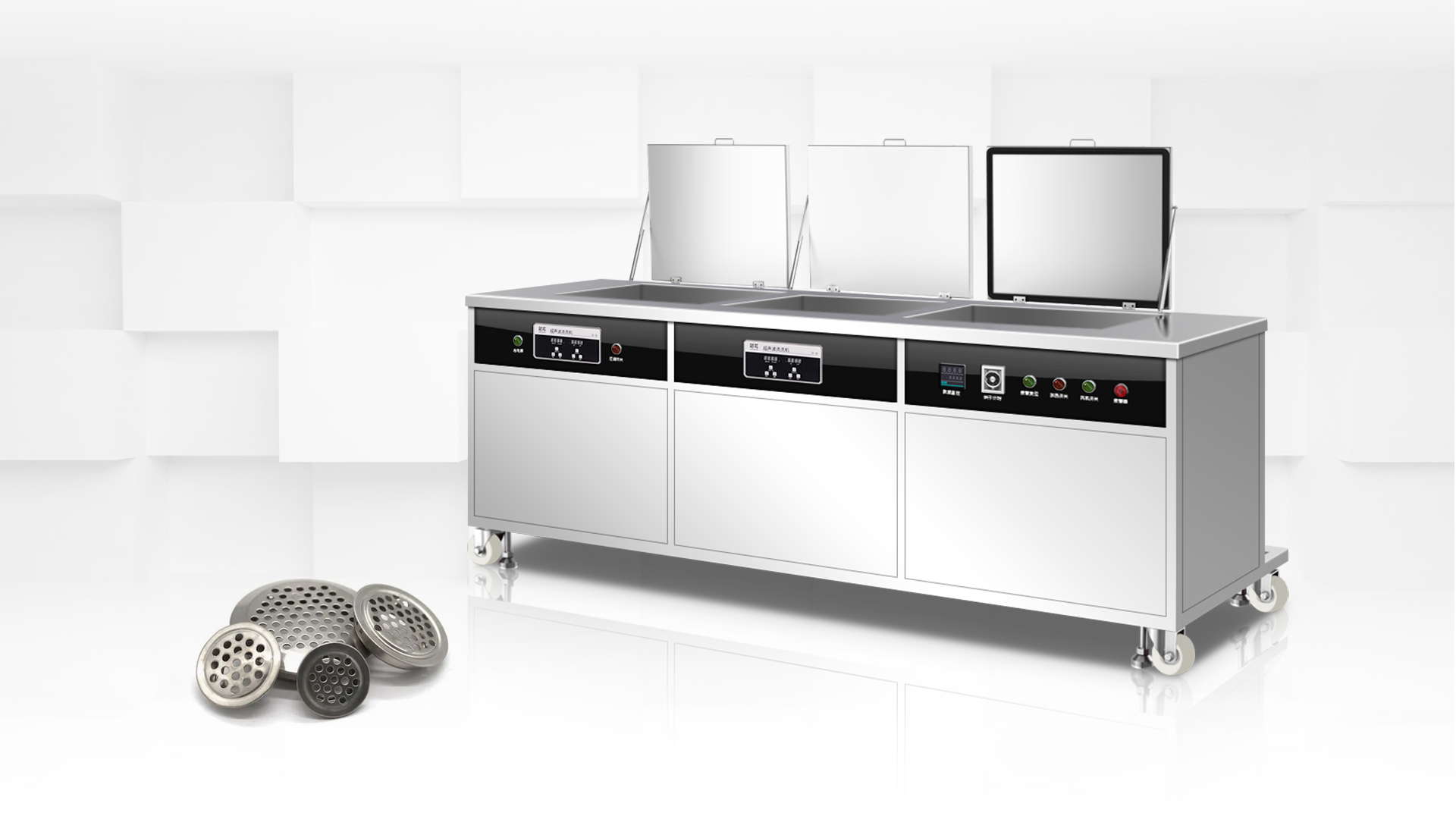
In manufacturing, strict requirements are placed on the cleanliness of various parts, especially those with complex structures such as small holes. Traditional cleaning methods may not achieve the desired results, while the emergence of ultrasonic cleaning technology provides an effective solution to this problem. This article will explore the application of ultrasonic cleaning machines in cleaning parts with small holes.
I. The Principle of Ultrasonic Cleaning Machines
Ultrasonic cleaning machines operate based on the unique properties of ultrasound. Ultrasound is a sound wave with a frequency higher than 20,000 Hz, imperceptible to human hearing. By using piezoelectric ceramics or other similar devices, ultrasonic cleaning machines generate strong vibrations in water. These vibrations produce tiny bubbles. When these bubbles burst in the water, they generate instantaneous high pressure and high temperature, much like a tiny explosion in the water. This explosion can peel off dirt and particles from the surface of an object, thus achieving deep cleaning.
II. Application of Ultrasonic Cleaning Machines in Cleaning Parts with Small Holes
1. Deep Cleaning: Ultrasonic waves can penetrate deep into the interior of small holes, shaking off internal dirt and particles, achieving deep cleaning. This significantly improves cleaning efficiency and avoids the problem of incomplete cleaning of the interior of holes that may occur with traditional cleaning methods.
2. Saves time and manpower: Using an ultrasonic cleaner not only greatly improves cleaning efficiency but also saves a significant amount of manpower. This advantage is particularly pronounced when cleaning a large number of parts.
3. No damage to parts: Due to its cleaning mechanism, the ultrasonic cleaner does not cause wear or damage to the surface of parts. This is especially important for parts with strict requirements for surface finish.
4. Can clean parts of various materials: Whether it's metal, plastic, ceramic, or other materials, as long as the parts are large enough to fit into the ultrasonic cleaner, they can be cleaned using it.
III. Precautions for using ultrasonic cleaners
Although ultrasonic cleaners have many advantages, the following points should be noted when using them:
1. Correctly select the cleaning agent: Choose a suitable cleaning agent based on the material of the parts to be cleaned and the nature of the stains. Ensure that the cleaning agent is compatible with the materials of the ultrasonic cleaner to avoid chemical reactions.
2. Set the cleaning time correctly: Too short a cleaning time may result in incomplete cleaning, while too long a cleaning time may damage the parts. Therefore, the cleaning time needs to be set reasonably according to the actual situation.
3. Ensure the stability of the parts: When placing parts into the ultrasonic cleaner, ensure their stability to avoid movement or collision during the cleaning process.
4. Regular maintenance and upkeep: To ensure the normal operation of the ultrasonic cleaner, regular maintenance and upkeep are required, including replacing the filter and changing the oil.
Ultrasonic cleaners have significant advantages in cleaning parts with small holes. They not only improve cleaning efficiency but also save manpower and time, while ensuring the integrity and quality of the parts. However, users also need to pay attention to the usage methods to ensure correct use and maintenance of the ultrasonic cleaner to fully utilize its advantages.