


Ultrasonic Industrial Cleaning: The Silent Revolution Behind Global Precision Manufacturing
I. Introduction: Cleaning is Becoming an "Invisible Competitive Advantage" in Manufacturing
Behind precision components such as semiconductor wafers, aircraft engine blades, surgical instruments, and automotive fuel injectors lies a process often overlooked yet crucial to product yield and lifespan—industrial cleaning.
Over the past few decades, advanced manufacturing companies in Europe, America, and Japan have been the first to realize that parts cleaning is no longer just a matter of aesthetics, but rather a matter of yield, performance, and safety. In authoritative international engineering and technical literature (ScienceDirect's "Handbook of Cleaning / Surface Preparation" series), ultrasonic cleaning is defined as "the only cleaning technology capable of removing contaminants that other technologies cannot remove and cleaning areas that other technologies cannot reach." Today, from space telescopes to cardiac stents, ultrasonic cleaning has become a standard process in global precision manufacturing.
II. Principle: Invisible Cavitation, Visible Cleanliness
Ultrasonic cleaning utilizes high-frequency, high-intensity sound waves propagating in liquids to remove contaminants from the surface of objects through the cavitation effect. The entire mechanism can be divided into three stages:
Bubble formation: The transducer converts high-frequency electrical signals into mechanical vibrations, exciting alternating positive and negative pressure sound waves in the cleaning fluid. The negative pressure phase causes millions of tiny bubbles (cavitation nuclei) to form inside the liquid.
Bubble expansion: Bubbles absorb energy in the low-pressure area, expand rapidly, and accumulate energy.
Bubble collapse: Sudden pressure changes cause the bubbles to implode instantaneously, generating extremely high instantaneous pressure and temperature locally, forming high-speed micro-jet streams that "blast" away oil, particles, and oxide layers adhering to the workpiece surface.
The cleaning effect is driven by bubble collapse, not by the "scouring" effect of the sound waves themselves. This mechanism brings two major disruptive advantages:
No blind spots: Traditional methods such as spray cleaning, brushing, and soaking are "visible" technologies—areas that nozzles and brush bristles cannot reach are not cleaned. Ultrasonic cleaning, however, can clean any surface that the liquid can reach: blind holes, thread roots, deep grooves, and internal cavities—leaving no area untouched.
Non-destructive Precision: Cavitation forces are concentrated at the interface between contaminants and the surface. With proper selection of frequency and power density, the workpiece surface, including precision parts with nanoscale geometric features, will not be damaged.
Frequency is a Key Parameter: The commonly used frequency range for industrial cleaning is approximately 20–200 kHz. Lower frequencies result in larger cavitation bubbles and stronger cleaning force, suitable for heavy oil stains (but frequencies below 30 kHz may damage the surface); higher frequencies result in smaller bubbles, more suitable for removing precision parts, blind holes, and micron/submicron particles; "mega-sonic cleaning" above 800 kHz is used in ultra-clean environments such as semiconductor wafers. International engineering literature suggests that the 30–70 kHz range balances cleaning effectiveness and surface safety, making it the mainstream choice for industrial applications.
III. Applications: From Operating Rooms to Space, Ultrasonic Cleaning is Everywhere
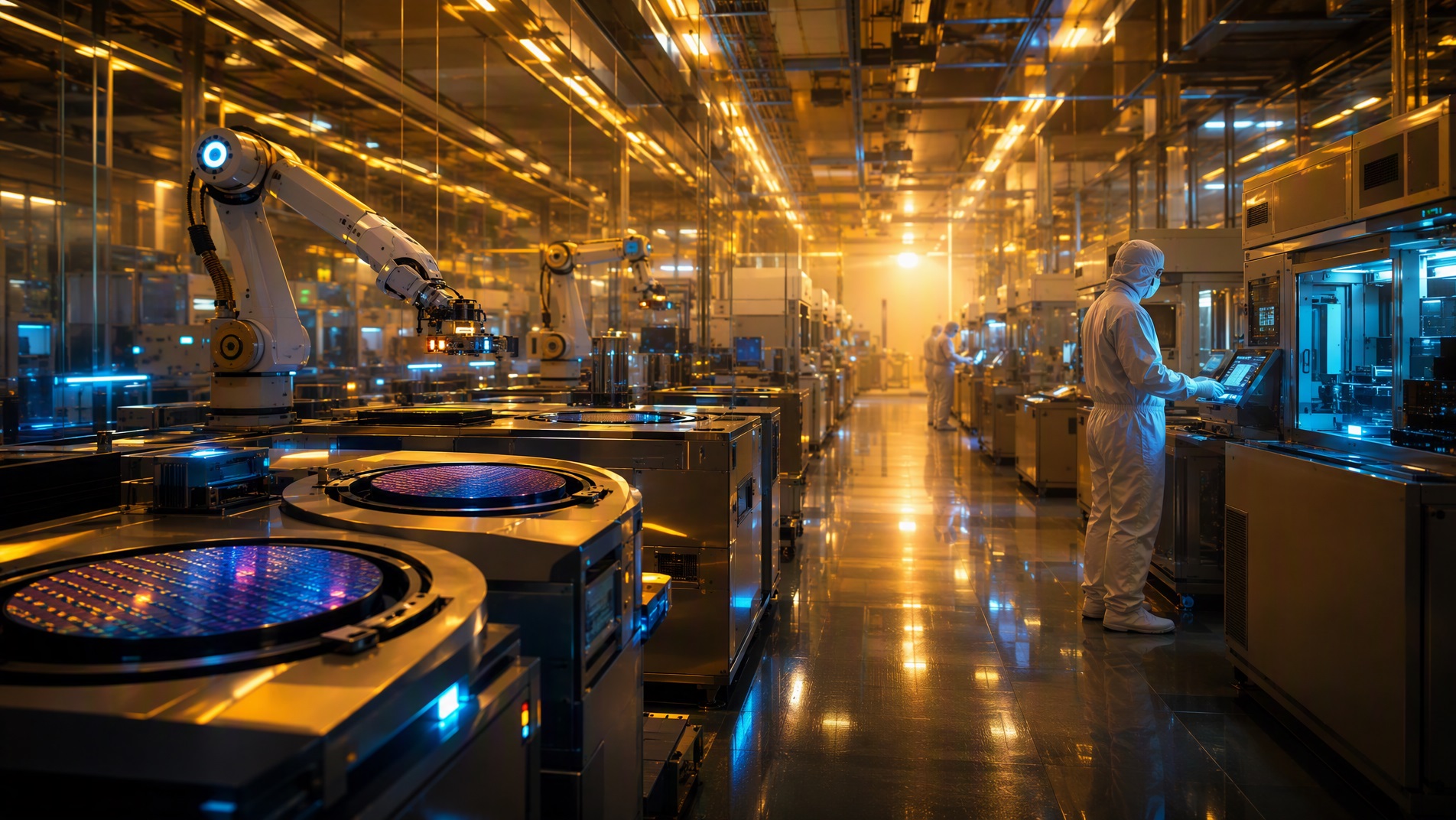
Semiconductors and Electronics: Wafers, hard disk platters, and integrated circuit assemblies—requiring the removal of micron and even submicron particles and ionic contaminants—are the "home ground" for ultrasonic/mega-sonic cleaning.
Aerospace: Engine blades, landing gear, fuel system components – removes oil and oxide layers before penetrant testing (fluorescent flaw detection), achieving "flight-grade" cleanliness before assembly.
Medical Devices & Pharmaceuticals: Surgical instruments, implants, drug-contact components – microscopic cleaning, meeting stringent medical device regulations regarding residues and particles.
Automotive Manufacturing & Repair: Engine blocks, fuel injectors, brake calipers, transmission components – powerfully removes carbon deposits, sludge, and metal shavings.
Precision Metalworking: Removes chips and cutting oil from machining processes, polishing compound residue before electroplating, and oxide scale after heat treatment.
Optics & Precision Instruments: From eyeglass lenses to space telescope lenses, it removes scratch-like contaminants.
Others: Deburring of hardware, jewelry, firearms maintenance, cosmetic production equipment, and pre-passivation treatment of stainless steel.
IV. Selection and Implementation Recommendations
If you are introducing or upgrading ultrasonic cleaning to your production line, we recommend evaluating it in the following order:
Define contaminants and cleanliness standards: oil/particles/oxide layer? What micron-level cleanliness level is required? Are there any industry standards (e.g., medical, semiconductor) that need to be met?
Choose frequency and power density: Low frequency (25–28 kHz) for heavy-duty coarse cleaning; high frequency (40–80 kHz or sweep/multi-frequency combination) for precision parts; consider mega-sound for ultra-clean environments.
Matching cleaning fluid: Water-based systems (surfactants/alkaline/acidic) are the mainstream; pay attention to the compatibility of the cleaning fluid with the workpiece material, foaming properties, and degassing treatment.
Determining temperature and time windows: Generally, 50–70°C combined with ultrasound yields the best results, but it must be matched with the cleaning fluid instructions to avoid excessive corrosion.
Planning automation level: From single-tank machines with manual loading and unloading to multi-tank production lines and fully automated robotic production lines, weigh output against labor costs.
Ultrasonic cleaning is not a "new invention", but a mature technology repeatedly validated by the global precision manufacturing industry. As Chinese manufacturing moves towards a high-value-added, high-yield precision era, ultrasonic cleaning is changing from "optional" to "essential." Whether it's domestic semiconductor production, new energy vehicle components, or high-end medical devices, whoever can perfect the "invisible process" of cleaning will have a greater competitive edge.