


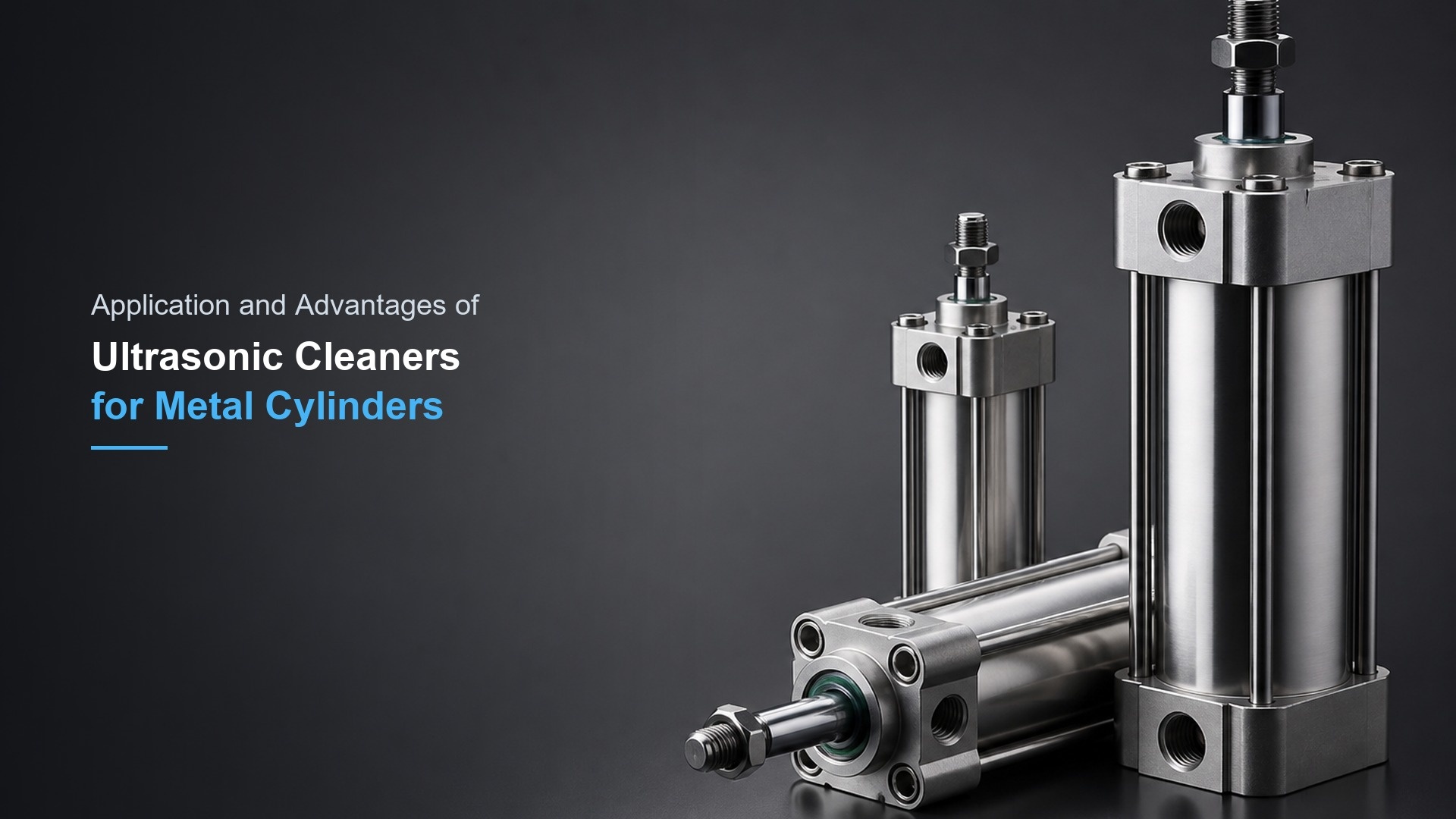
With the rapid development of industrial production, metal cylinders have come to play a vital role in mechanical equipment. Due to the complex and variable environments in which they operate, these cylinders are frequently prone to issues such as carbon deposits, scaling, and rust—problems that can not only disrupt normal equipment operation but may even lead to complete equipment failure. Consequently, effective cleaning of these cylinders is essential.
An ultrasonic cleaner is a device that utilizes high-frequency ultrasonic vibrations to generate microscopic bubbles and shock waves, which in turn remove contaminants from the surfaces of objects. The operating principle involves using ultrasonic vibrations to break down liquid molecules into nano-scale particles; driven by shock waves, these particles move at high speeds, effectively dislodging and stripping away dirt and deposits. Compared to traditional cleaning methods, ultrasonic cleaning offers several advantages, including faster processing, superior cleaning results, and greater energy efficiency.
In the context of cleaning metal cylinders, ultrasonic cleaners are applied in the following ways:
1. Removing carbon deposits: Carbon buildup inside a cylinder is a key factor that impairs its performance. Through high-frequency vibrations, an ultrasonic cleaner facilitates a chemical reaction between the carbon deposits and the cleaning agent, effectively removing the buildup from within the cylinder.
2. Cleaning piston rings: Piston rings are critical components for cylinder sealing, and their cleanliness directly impacts the cylinder's sealing performance. Ultrasonic cleaners can efficiently remove oil, grime, and carbon deposits from the surfaces of piston rings, thereby enhancing their sealing capability.
3. Cleaning cylinder liners: Cylinder liners are external components of the cylinder assembly, and their cleanliness also affects overall performance. Ultrasonic cleaners can remove oil, grime, and dust from the surfaces of these liners, helping to improve the operational efficiency of the cylinder.
4. Removing rust: During use, metal cylinders are susceptible to rust due to exposure to water and oxygen. Ultrasonic cleaners utilize high-frequency vibrations to remove rust from the cylinder surfaces, ensuring the components remain clean. The application of ultrasonic cleaning machines for metal cylinders offers several key advantages:
1. Highly Efficient Cleaning: Ultrasonic cleaners can rapidly and effectively remove dirt and carbon deposits from the interior of cylinders, thereby enhancing equipment operational efficiency.
2. Energy Conservation: Compared to traditional cleaning methods, ultrasonic cleaners offer superior cleaning efficiency while simultaneously reducing energy consumption.
3. Ease of Operation: Ultrasonic cleaning systems are simple to operate; the process is as straightforward as placing the cylinder into the cleaning solution and activating the equipment.
4. Environmentally Friendly and Pollution-Free: Ultrasonic cleaning agents are typically water-based and free from harmful substances such as strong acids or alkalis, making them both eco-friendly and safe for human contact.
5. Extended Equipment Lifespan: By ensuring that the surfaces of metal cylinders are thoroughly cleaned, ultrasonic cleaning helps minimize the risks of wear and corrosion, ultimately extending the service life of the equipment.
In summary, the use of ultrasonic cleaning machines for metal cylinders provides significant advantages and delivers excellent results. As industrial automation advances and environmental awareness grows, ultrasonic cleaning technology will play an increasingly vital role in the fields of machinery manufacturing and maintenance. Moving forward, it is worth exploring how to further optimize the application of ultrasonic cleaning technology for metal cylinders—ultimately improving equipment cleanliness and operational efficiency, and creating greater value for industrial production.