


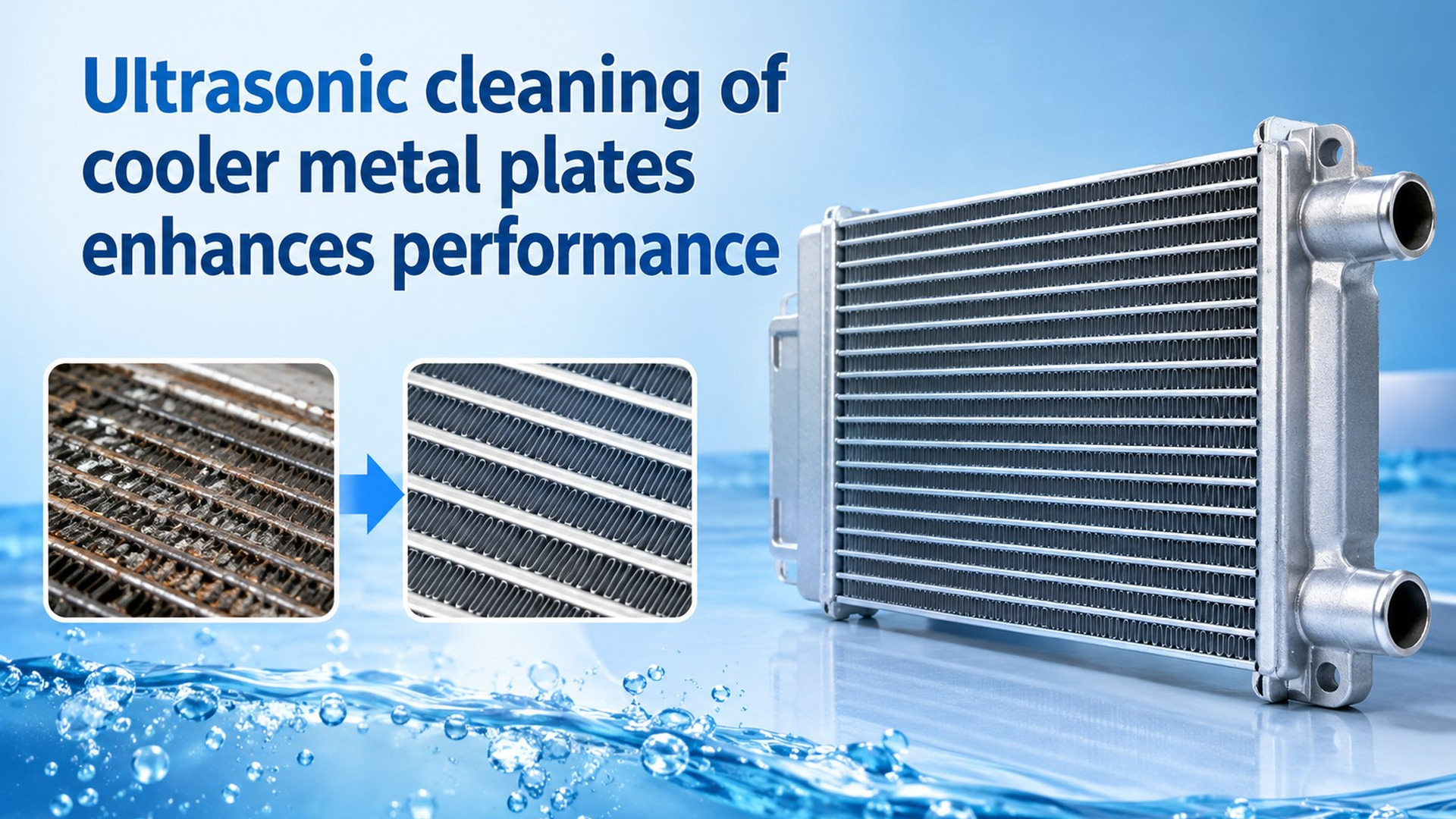
With the rapid development of industrial production, the heat generated by various types of mechanical equipment during operation has steadily increased, leading to a decline in performance and even equipment failure. Coolers are widely used in industrial settings, and the cleanliness of their metal plates is critical to their overall performance. This article explores the application of ultrasonic cleaners in enhancing the cleanliness of cooler metal plates and the resulting improvements in equipment performance.
I. Working Principle of Ultrasonic Cleaners
Ultrasonic cleaners utilize the cavitation effect—generated by ultrasonic waves within a liquid—to clean the surfaces of objects. Specifically, as ultrasonic waves propagate through a liquid, they encounter discontinuities on the surface of a medium (known as cavitation nuclei). This triggers the instantaneous creation of localized vacuums, forming cavitation bubbles. When these bubbles rapidly expand and collapse, they release immense energy, which disrupts the adhesive forces and chemical bonds holding contaminants in place, allowing the dirt to easily detach from the surface.
II. Impact of Metal Plate Cleanliness on Cooler Performance
Coolers are essential components in industrial production, primarily designed to lower the temperature of the medium flowing through them. Metal plates serve as a core component of these coolers, and their cleanliness is vital to the equipment's performance. If dirt or carbon deposits accumulate on the surfaces of these plates, heat transfer efficiency decreases, causing the temperature of the coolant to rise—which, in turn, impairs the performance of the entire system.
III. Application of Ultrasonic Cleaners for Cooler Metal Plates
Ultrasonic cleaners are highly effective at removing dirt and carbon deposits from the metal plates of coolers, thereby enhancing both the cleanliness of the plates and their heat transfer efficiency. The typical process for using an ultrasonic cleaner is as follows:
1. Place the metal plates requiring cleaning into the cleaning tank;
2. Add an appropriate amount of cleaning agent to the tank;
3. Activate the ultrasonic cleaner, setting the optimal cleaning duration and power level;
4. Once the cleaning cycle is complete, rinse the metal plates thoroughly with clean water and dry them. IV. Enhancement of Equipment Performance via Ultrasonic Cleaning
Ultrasonic cleaning of cooler metal plates results in a higher degree of cleanliness and improved heat transfer efficiency, thereby enhancing the overall performance of the equipment. Specifically, the performance improvements facilitated by ultrasonic cleaning are reflected in the following areas:
1. Increased operational efficiency: Enhanced heat transfer efficiency in the cooler metal plates allows the equipment to dissipate heat more effectively, leading to greater operational efficiency.
2. Extended equipment service life: Clean metal plates mitigate the negative impact of fouling and carbon deposits on heat transfer, which helps extend the service life of the equipment.
3. Reduced operating costs: Improved operational efficiency and an extended service life contribute to lower overall operating costs.
4. Enhanced product quality: Clean cooler metal plates help improve product quality, thereby boosting a company’s market competitiveness and customer satisfaction.
In summary, the use of ultrasonic cleaning for cooler metal plates effectively enhances equipment performance and production efficiency while reducing operating costs, serving as a positive catalyst for industrial production.