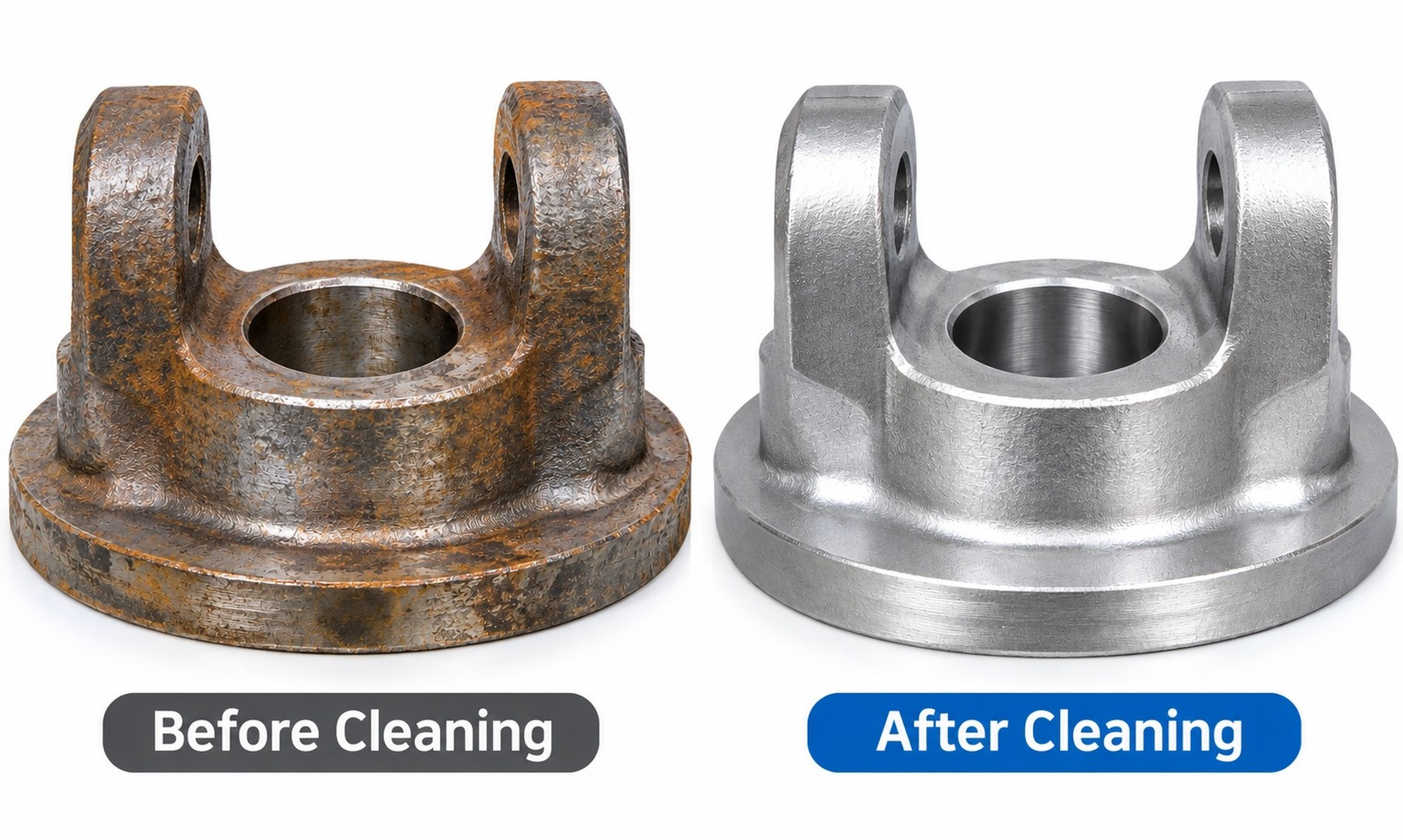


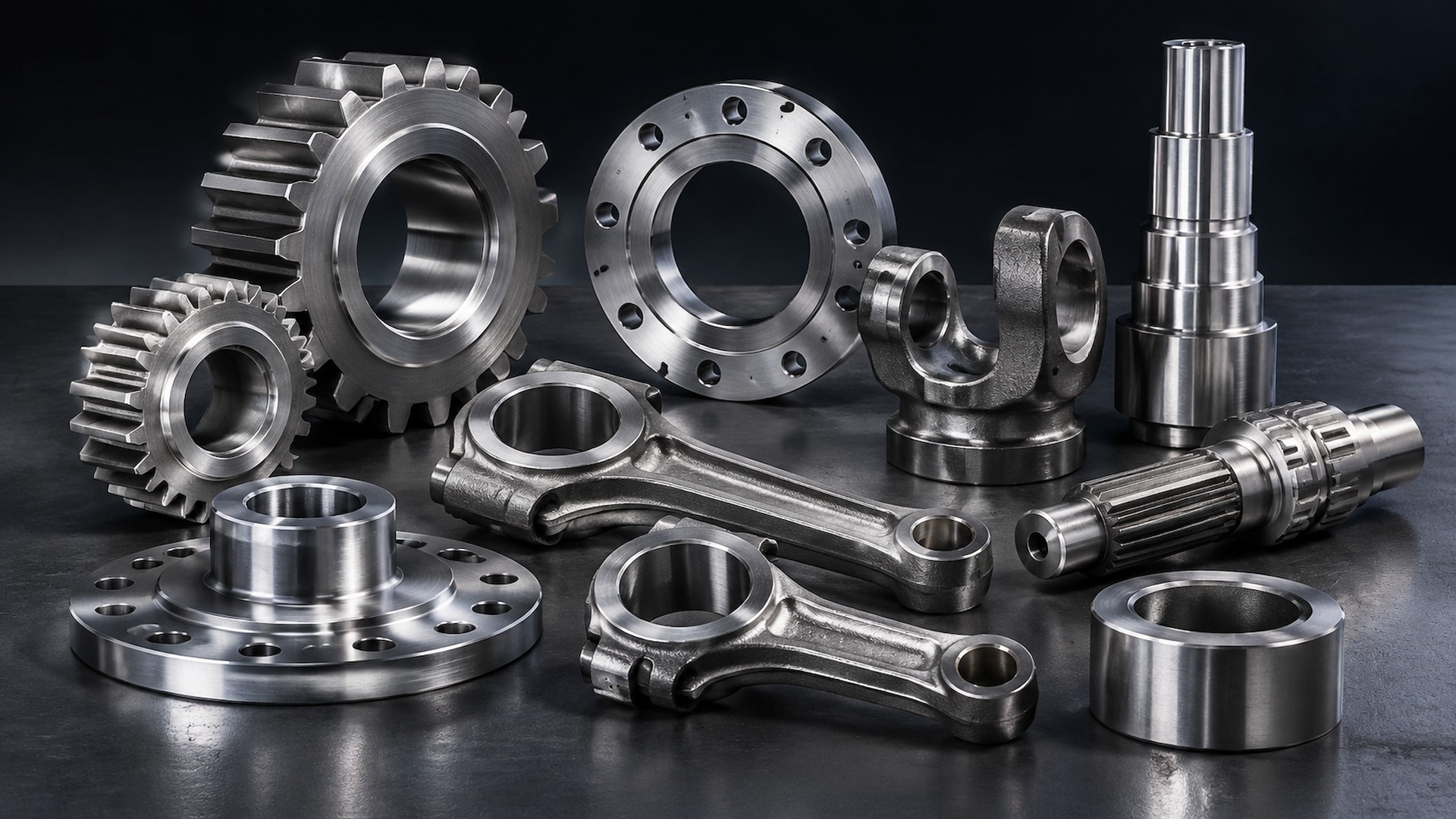
With the continuous development of industrial production, metal forgings are being used increasingly across a wide range of sectors. During the production process, however, these forgings are often exposed to various contaminants, resulting in the accumulation of surface impurities such as grime and oxide scale, which can compromise their performance and service life. Consequently, the effective removal of these impurities has become a critical challenge in the surface treatment of metal forgings. As an innovative cleaning solution, ultrasonic cleaners—noted for their high efficiency, environmental friendliness, and energy conservation—have found widespread application across many industries. This article explores the key applications of ultrasonic cleaning technology in the surface treatment of metal forgings.
I. Principles and Characteristics of Ultrasonic Cleaners
An ultrasonic cleaner is a device that utilizes the principle of ultrasonic vibration to clean the surfaces of objects. It primarily consists of an ultrasonic generator, a transducer, a cleaning tank, and a pneumatic pump. The operating principle is as follows: the ultrasonic generator produces high-frequency electrical signals, which are converted by the transducer into ultrasonic vibration signals. This generates high-frequency vibrations that create high-speed micro-jets within the cleaning fluid, effectively scouring the surfaces of the objects.
ⅡUltrasonic cleaners offer the following characteristics:
1. High Cleaning Efficiency: The micro-jets generated by ultrasonic vibrations can rapidly scour the surfaces of objects, significantly enhancing cleaning efficiency.
2. Environmentally Friendly and Energy-Efficient: Ultrasonic cleaners do not require chemical reagents, ensuring no environmental pollution. Furthermore, their high power density and superior energy conversion efficiency make them an environmentally responsible and energy-saving solution.
3. Broad Applicability: Ultrasonic cleaners can accommodate objects of various shapes and sizes, and the cleaning process can be performed at room temperature.
4. High Safety: Ultrasonic cleaners do not cause scratches or corrosion to the surfaces of the objects being cleaned, ensuring a high level of safety. II. Key Issues in the Surface Treatment of Metal Forgings: During the surface treatment of metal forgings, the following key issues are frequently encountered:
5. Dirt and Scale: Metal forgings are exposed to various contaminants during the production process, resulting in the formation of impurities such as dirt and oxide scale on their surfaces. These impurities can negatively affect the performance and service life of the forgings.
6. Surface Roughness: The presence of impurities like dirt and oxide scale increases the surface roughness of metal forgings, which in turn impairs their performance and service life.
7. Dimensional Accuracy: Impurities such as dirt and oxide scale on the surface of metal forgings can reduce their dimensional accuracy, thereby affecting their performance and service life.
III. Application of Ultrasonic Cleaners in the Surface Treatment of Metal Forgings:
1. Pre-treatment: Ultrasonic cleaners can be used for the pre-treatment of metal forgings prior to further processing. By removing surface impurities—such as dirt and oxide scale—ultrasonic cleaning helps enhance the performance and service life of the forgings.
2. Post-processing (After Precision Machining): Following precision machining, ultrasonic cleaners can be used for post-treatment. This process removes residual oil, oxide scale, and other surface impurities, thereby improving the performance and service life of the metal forgings.
3. Quality Control: Ultrasonic cleaners can be utilized during the quality control of metal forgings. By detecting surface impurities like dirt and oxide scale, these machines enable the timely identification and handling of non-conforming products, ensuring overall product quality and reliability.
In summary, ultrasonic cleaners have a wide range of applications in the surface treatment of metal forgings. They effectively remove surface impurities—such as dirt and oxide scale—thereby enhancing the performance and extending the service life of the metal forgings.