


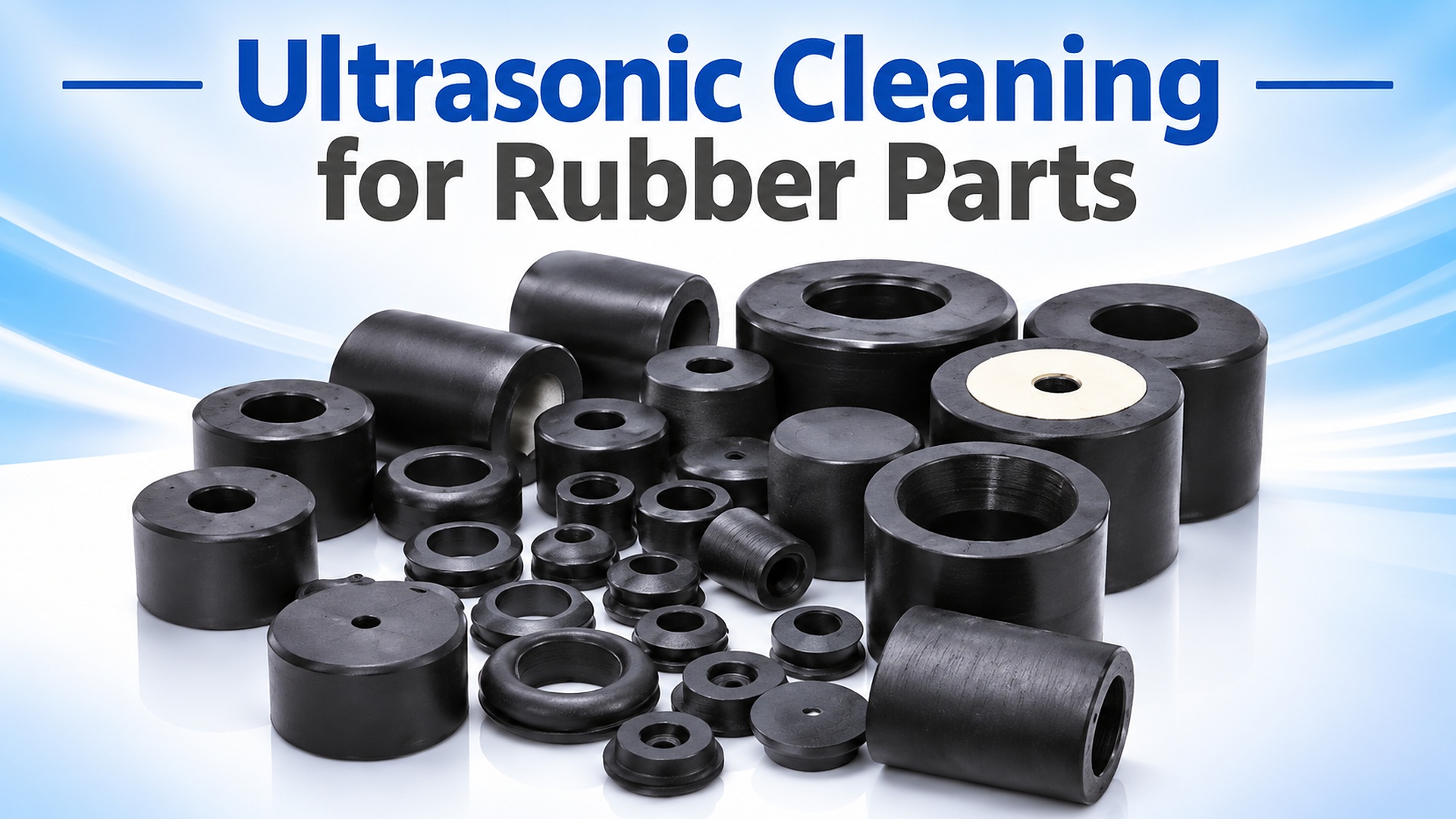
In the manufacturing industry, mold cleaning is a critical task; it directly impacts production efficiency, product quality, and manufacturing costs. Traditional cleaning methods are often labor-intensive and time-consuming, and they frequently fail to completely remove grime and carbon deposits from mold surfaces, leading to various issues during production. Ultrasonic cleaning machines offer an innovative solution, effectively addressing the challenges associated with cleaning rubber molds.
First, let us examine the background and current state of rubber mold cleaning.
During use, rubber molds are exposed to various chemical substances and impurities, which cause their surfaces to become rough, sticky, or even coated with carbon deposits. These factors negatively affect both the quality of rubber products and overall production efficiency. Conventional cleaning approaches—such as manual scrubbing, the use of organic solvents, or chemical cleaning agents—can remove some surface grime and carbon deposits, but they come with significant drawbacks. Manual cleaning is labor-intensive, time-consuming, and struggles to reach deep-seated contaminants. Organic solvents, while capable of removing stubborn residue, pose environmental pollution risks. Chemical cleaning agents, though fast-acting, can cause corrosion or damage to the mold surface.
Ultrasonic cleaning machines represent an innovative solution that harnesses the energy of ultrasonic waves to clean object surfaces. These machines typically consist of an ultrasonic generator, a transducer, a cleaning tank, and a cleaning medium (such as water). The ultrasonic generator produces high-frequency electrical signals, which the transducer converts into ultrasonic energy that is transmitted into the cleaning fluid. When these ultrasonic waves propagate through the liquid, they generate microscopic bubbles that rapidly expand and then collapse; this process creates shock waves and micro-jets, which effectively dislodge grime and impurities from the surfaces of the objects being cleaned.
The process of cleaning rubber molds using an ultrasonic cleaner involves the following steps:
1. Pre-treatment: The rubber mold is first placed into a pre-wash tank, where it is cleaned using water and agents such as surfactants to remove the bulk of the surface grime and oily residues. 2. Ultrasonic Cleaning: Place the pre-treated rubber molds into the ultrasonic tank of the cleaning machine. The energy from the ultrasonic waves performs a deep clean of the mold surfaces, penetrating every tiny crevice and pore to effectively remove deep-seated grime and carbon deposits.
3. Rinsing: Once the ultrasonic cleaning process is complete, transfer the molds to the rinsing tank of the machine and rinse them with clean water to remove any residual chemicals or cleaning agents.
4. Drying: Finally, remove the molds and dry their surfaces using a drying unit or a hot-air blower.
Compared to traditional cleaning methods, ultrasonic cleaning machines offer the following advantages:
1. High Efficiency: Ultrasonic cleaning machines can quickly and effectively remove grime and carbon deposits from mold surfaces, thereby boosting production efficiency.
2. Environmentally Friendly: These machines use water as the cleaning medium, causing no environmental pollution. Furthermore, they eliminate the need for organic solvents or harsh chemical agents, preventing corrosion or damage to the mold surfaces.
3. Cost-Effective: By reducing the labor and time required for manual cleaning, ultrasonic cleaning machines help lower production costs.
4. Ease of Operation: These machines are simple and convenient to operate—cleaning can be initiated with the press of a switch.
In summary, ultrasonic cleaning machines represent an innovative solution to the challenges of cleaning rubber molds. With their benefits—high efficiency, environmental friendliness, cost-effectiveness, and ease of use—they represent the future trend in industrial cleaning. However, when employing this technology, it is essential to consider factors such as selecting the appropriate cleaning agent, properly controlling ultrasonic power, and adhering to safe operating procedures. Only through correct usage can the full potential of ultrasonic cleaning machines be realized, delivering greater value to industrial production.