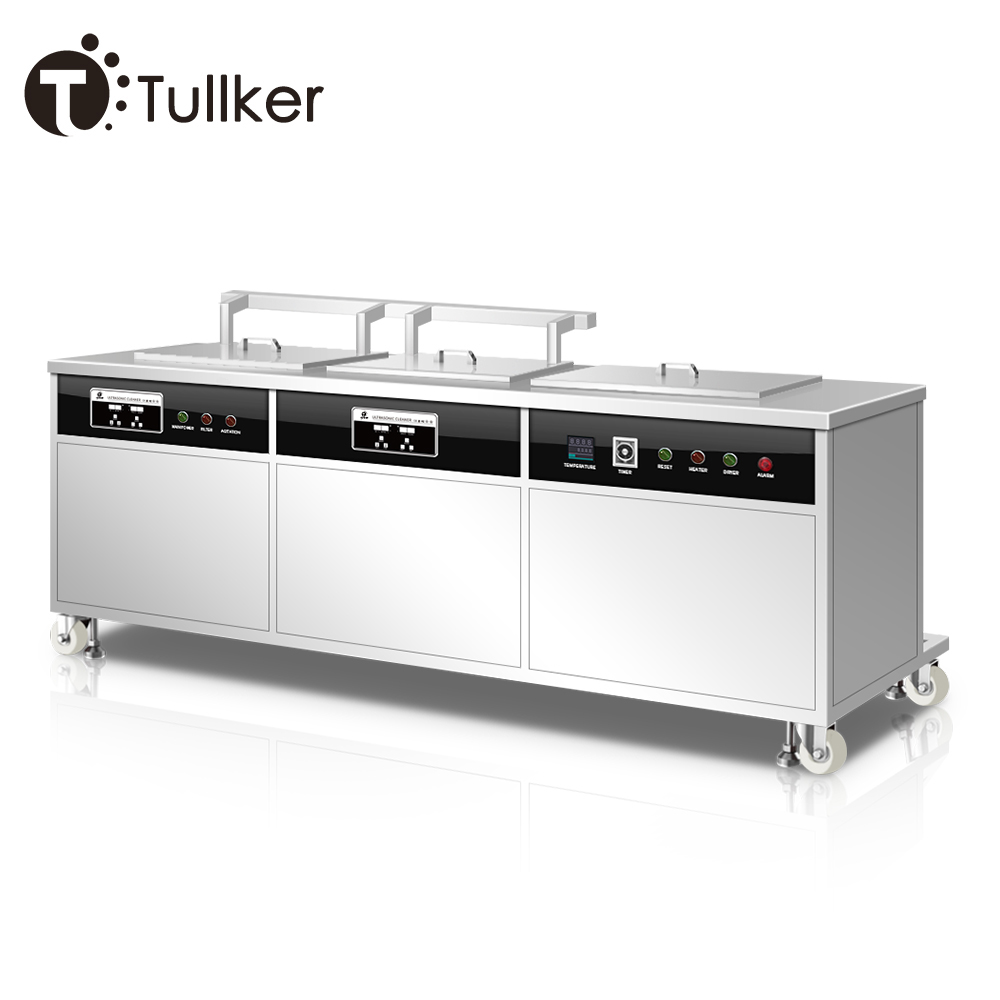



Ultrasonic cleaning machines are devices that utilize the physical properties of ultrasound for cleaning, playing a crucial role in aseptic production within the manufacturing industry. This article will explain the working principle of ultrasonic cleaning machines, their applications in aseptic production, comparisons with other cleaning methods, and future development trends.
I. Working Principle of Ultrasonic Cleaning Machines
The working principle of ultrasonic cleaning machines is based on the physical properties of ultrasound. Ultrasound is a sound wave with a frequency higher than 20,000 Hz, imperceptible to human hearing. Ultrasonic cleaning machines convert electrical energy into mechanical energy through a high-frequency electric field, generating high-frequency oscillations. This causes tiny bubbles in the cleaning fluid to vibrate, expand, and collapse; these tiny bubbles are called "cavitation bubbles." The collapse of cavitation bubbles generates high-temperature, high-pressure energy, impacting the surface of the object being cleaned, thus achieving a cleaning effect.
II. Applications of Ultrasonic Cleaning Machines in Aseptic Production
1. Pharmaceutical Industry: The pharmaceutical industry has extremely strict requirements for aseptic production; even the smallest contamination can severely affect the quality of medicines. Ultrasonic cleaning machines can effectively clean dirt and bacteria from the surfaces of pharmaceutical equipment, pipes, containers, and other items, ensuring aseptic requirements during the production process.
2. Medical Device Industry: Medical devices require a high degree of cleanliness and sterility during production and use; otherwise, serious consequences such as infection may occur. Ultrasonic cleaners can efficiently clean the surfaces of medical devices while also killing viruses and bacteria, ensuring the safety and effectiveness of the devices.
3. Food Industry: The food industry also has very high requirements for cleanliness and hygiene. Any microbial or bacterial contamination can seriously affect food quality and safety. Ultrasonic cleaners can efficiently clean the surfaces of food processing equipment, containers, and other items while also killing bacteria and viruses, ensuring food safety and quality.
III. Comparison of Ultrasonic Cleaning Machines with Other Cleaning Methods
1. Traditional Manual Cleaning: While simple and easy, traditional manual cleaning is not ideal in terms of cleaning effect and requires a lot of manpower and time. Furthermore, manual cleaning cannot achieve complete sterility, easily leading to secondary contamination.
2. Chemical Cleaning: Chemical cleaning utilizes chemical reagents to react with dirt and bacteria to achieve a cleaning effect. While chemical cleaning has a good cleaning effect, the chemical reagents may damage the surface of the cleaned items, and their use can also pollute the environment.
3. Physical Cleaning: Physical cleaning uses physical methods to separate dirt and bacteria from the surface of the object being cleaned, such as mechanical cleaning and laser cleaning. Physical cleaning generally does not damage the surface of the object being cleaned, but its cleaning efficiency is low, requiring a significant amount of time and manpower. In contrast, ultrasonic cleaning machines have advantages such as high efficiency, environmental friendliness, and safety. Ultrasonic cleaning machines can achieve cleaning results quickly and efficiently without damaging the surface of the object being cleaned, and they do not use harmful chemical reagents, making them environmentally friendly. Furthermore, ultrasonic cleaning machines can achieve better cleaning results by using different cleaning solutions and temperatures, adapting to various cleaning needs.
IV. Future Development Trends of Ultrasonic Cleaning Machines
1. Increased Efficiency: As production efficiency increases, the cleaning efficiency of ultrasonic cleaning machines also needs to be continuously improved. Future ultrasonic cleaning machines will employ more advanced ultrasonic generation technology and more efficient cleaning solutions to improve cleaning speed and effectiveness.
2. Intelligentization: With the development of intelligent technology, future ultrasonic cleaning machines will incorporate artificial intelligence technology to achieve automated and intelligent cleaning operations, improving production efficiency and reducing labor costs.
3. Environmental friendliness: With increasing environmental awareness, future ultrasonic cleaning machines will adopt more environmentally friendly technologies and materials, reducing pollution and energy consumption.
4. Multifunctionality: Future ultrasonic cleaning machines will be developed with more functions and applications, such as rust removal, paint removal, and adhesive removal, meeting more production needs.
In conclusion, ultrasonic cleaning machines play a vital role and have broad application prospects in aseptic production in the manufacturing industry. With continuous technological advancements and innovation, future ultrasonic cleaning machines will be more efficient, intelligent, environmentally friendly, and multifunctional, bringing greater convenience and benefits to aseptic production in the manufacturing industry.